
How ‘mega-science’ helps explain the plight of science communicators right now
How do we communicate about -- or as journalists, cover -- 3.5 million scientific studies per year?

In my last post here, I wrote about problems with the “study story” model of science journalism, especially given the arrival of AI, which can potentially churn out these stories far more rapidly than human writers can. The post was one of my most popular so far here on Substack, and drew some notable responses.
I have plenty more to say here, and the initial response makes me think that’s worth doing. That’s especially the case since one of the key data sources drawn on in the story — a National Science Board look at total global scientific publishing, per year — has recently received a big, arguably news-making update.
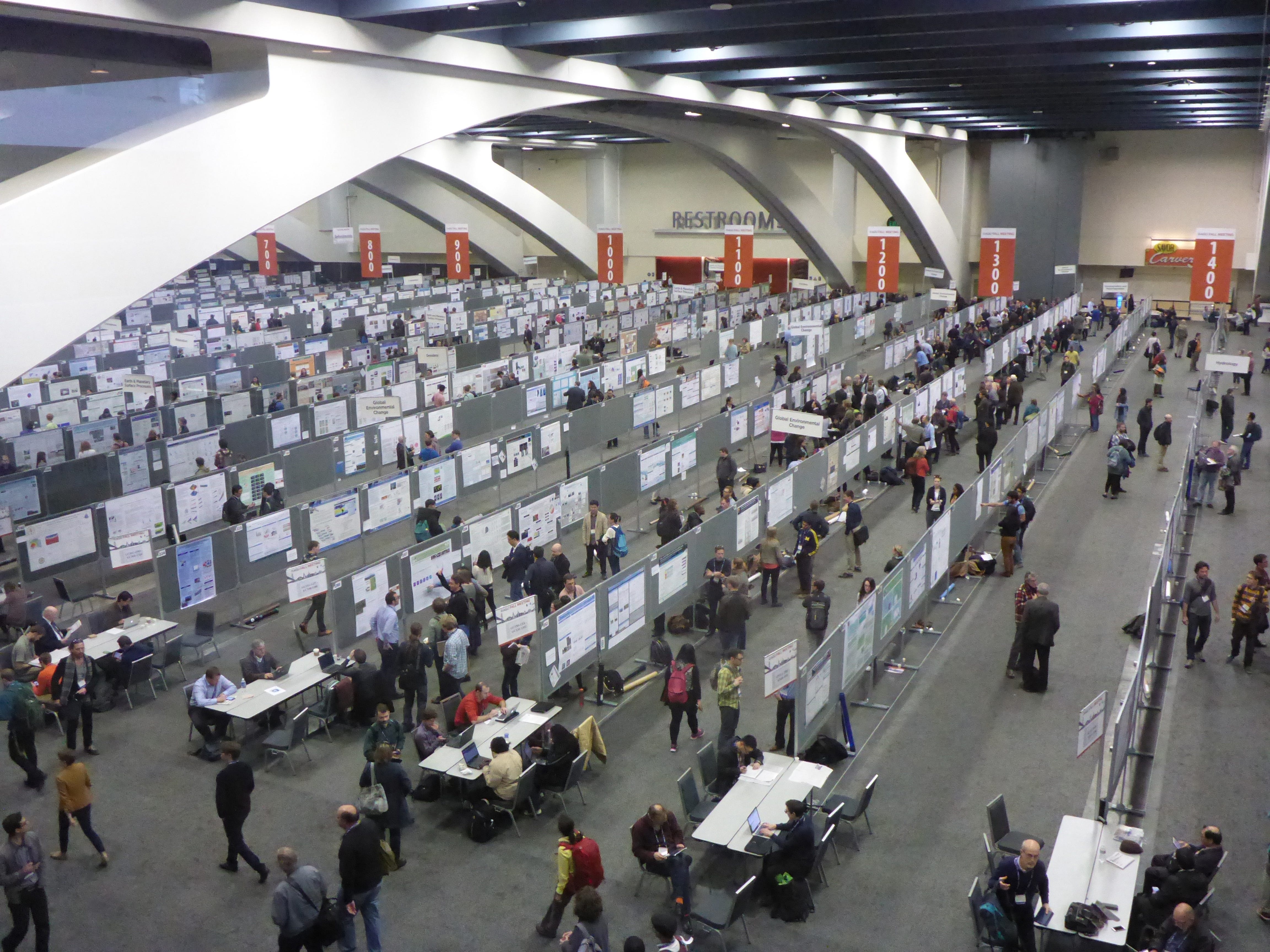
Therefore, in this post, I want to go deeper on one of the major, data-driven aspects of the case. It is this: Global science is now so large, is producing so many research papers per year, that the idea that we can cover it study-by-study is rather…quaint. Yes, there will still be moments when you want to cover a single study. But if this is all you are doing, you run the risk of missing the entire edifice.
To get further into the argument, let’s begin with a look at the data.
The arrival of global mega-science
For some time, the U.S. Science and Engineering Indicators report, released by the National Science Board, has contained a section on the global output of research publications. I’ve been tracking it for several years, fascinated by how large the annual totals have been getting (even prior to the full arrival of AI in scientific research and publishing). More generally, I’ve been increasingly interested in understanding the scale of science, principally because of the communications challenge I believe it poses.
So when the latest installment came out and updated the data through 2024 — pushing global scientific publications above 3.5 million annually — I felt I needed to make a bigger point about it. (These data actually came out about a week before my first story published, but I just didn’t realize it. Nice one, Chris.)
Here is the chart I showed before, now updated through 2024:
The report finds that 2024 global science and engineering publications number just over 3.5 million across countries, based on the Scopus database. That is an increase of roughly 250,000 studies over 2023, or just under 8 percent. While there have been larger increases on a percentage basis in prior years, in absolute terms this is the single largest yearly increase in this dataset, which goes back to 2002.
There is much one could say about these data and what they mean. Here, I’ll focus first on what is driving the continuing global increase. Next, while we can all surely agree that having more science in the world is a good thing, I want to look at the science communication and science journalism challenges posed by this enormous research explosion.
The drivers of mega-science
What’s driving this global growth of science? You might feel tempted to say AI, and possibly that’s filtering a bit into the most recent numbers. But as you can see, we’re talking about a trend that has unfolded over a far longer period of time.
It turns out this question gets a very thorough answer in a recent book: Global Mega-Science: Universities, Research Collaborations, and Knowledge Production, published in 2024 by David P. Baker of Penn State and Justin J.W. Powell of the University of Luxembourg. I interviewed Baker as part of the writing of this post and will give him first word on how to interpret the data above.
First, Baker said he thinks the latest numbers in Science and Engineering Indicators are correct, that the growth is real. “It’s a real growth in capacity,” he said.
Baker and Powell argue that capacity growth has two major causes. One is the global expansion of universities, which has occurred as countries across the world recognized the centrality of education to their economic futures. “As universities developed, more and more people went to higher education in more and more countries, they produced more and more science,” Baker said.
The other cause, Baker said, is something the chart above can elide a bit — international collaboration.
In the Science and Engineering Indicators data, articles with authors from multiple countries are tallied using a method called “fractional counting.” So an article with one author at a U.S. institution and one author at an institution in China gets counted as .5 articles for the U.S and .5 for China. But while breaking it out in this way helps illustrate the differing scientific capacities of different countries, it can obscure how many of these internationally collaborative articles there really are, and how such collaboration itself is fueling science. (Elsewhere, the Indicators report notes that 22 percent of papers in 2024 were the product of an international collaboration, a figure that has been growing.)
“The world capacity for research, even in 12 years, has greatly expanded, through collaboration, through more universities in more places,” Baker said.
The book by Baker and Powell came out in 2024, so it is not as up to date as the data shown above. However, it also presents additional supporting evidence about the growth of mega-science, including the following:
* Scientific journals. The book finds they have “doubled from approximately four thousand to over nine thousand in just three decades from 1980.”
* Universities: The book reports that as of 2010, globally, there were 38,200 “universities and other postsecondary organizations publishing STEM+ papers.” I’m sure it is even more now.
* Researchers: The authors cite a 2021 paper finding that from 1980 to 2015, the employment of research and development (R&D) workers tripled in OECD, or wealthier, countries. (Outside the OECD, these roles merely doubled.) Similarly, if you go and consult UNESCO’s figures, you’ll see that the number of researchers per million residents has been on the rise in countries around the world.
The ivory tower and the challenges of global mega-science
We are surely better off with lots of research going on, lots of attempts to understand the world around us, lots of people developing the skills and practices needed to answer difficult questions.
Indeed, while the benefits of the expansion of science and universities are myriad, perhaps the clearest lie in the realm of economics. There are a variety of ways of documenting this, but I have found a 2019 paper by London School of Economics researchers Anna Valero and John Van Reenen in Economics of Education Review particularly striking. It looks at thousands of universities, and the economic effects they have had on the regions in which they are located. The result, the authors find, is that “increases in the number of universities are positively associated with future growth of GDP per capita” in locations around the world.
Obviously, the growth of science also benefits our health and well-being. In Global Mega-Science, the authors note the explosion of research that occurred almost instantly upon the arrival of the coronavirus pandemic. An extremely rapid process of global science in action unfolded, one that led to major insights on the virus itself and, before too long, vaccines.
All of this is to the good. Still, the growth of global-mega science is not without its challenges and problems.
With ever more science being published, there will be ever more scientific error (and, yes, fraud). With more education, there will be more people winning PhDs but then using them to attack research, rather than contribute to it.
Indeed, there are already far more PhDs being produced than there are academic jobs for — although there’s debate over the extent that this is actually a problem, since academia is hardly the only possible or desired career path for someone with a doctorate. Without taking the stance that PhDs are over-produced, I do think there is the “curse of knowledge” to think about. Education is certainly beneficial overall. But a PhD level education also creates a certain kind of person, and that person has a very hard time seeing the world in the way a non-expert would.


This creates a gap between a world of highly educated “elites” and non-elites, one that is a key fault line in U.S. politics and life. So it’s not that we should have fewer PhDs, but rather that there is not nearly enough effort to make sure they learn other non-technical skills, like communication, especially if they aren’t going to end up being professors.
Indeed, as science has grown — and as publishing one or more papers in peer reviewed journals has become such a vital resume item — we’ve seen a number of abuses. For instance, so-called predatory journals seek to capitalize on the overwhelming drive to publish, drawing in researchers to do the work (and to pay to get it published) without necessary providing quality, peer review, or other traditional aspects of academic excellence.
Scientists also just struggle to process all this information. In a recent paper in Quantitative Science Studies, Mark Hanson of the University of Exeter and colleagues analyze the “strain on scientific publishing,” noting that “scientists are increasingly overwhelmed by the volume of articles being published.” Their paper documents not only the growth of published research itself, but also the increasing use of journal “special issues” to produce large numbers of papers, and at some publishers, a decrease in article turnaround times, among other factors.
“It becomes difficult to identify quality studies when you’re swamped with literature,” said Hanson in an interview. “And also, the assessment system that we have currently is not built for this gigantic mass of submissions of papers. There’s lots of editors complaining about being unable to find peer reviewers…we can’t do that at the scale they’re asking for anymore. Something’s got to change.”
Mega-science, communications, and media change
Baker is more optimistic about mega-science than Hanson. But both agreed in interviews that the growth itself, captured in the Indicators data above, is real.
What I now want to do is contemplate what it means specifically within the realms of science journalism and science communications.
Alas, in a world of mega-science, there will likely be mega-problems in science communication. Some haystack needles of science will make their way into the media in a very selective, and sometimes misrepresentative, way. But the majority of the information won’t. And the army of PhDs will groan, but not know what to do about it, except complain on their BlueSky accounts.
From the science journalist’s perspective, the challenge of covering the growth of knowledge appears overwhelming — especially in light of everything else that has been happening with our field.
The period over which a tripling of research publications has occurred — roughly the past 20 years, in which papers went from around 1.2 million per year to 3.5 million per year — is also a period of convulsive media change. It is the same broad era in which newspapers were decimated, networks were increasingly outgunned by cable (which, in turn, was outdone by streaming), and everyone succumbed to social media (and is now busy succumbing to AI).
Simply put, even as there are more scientific papers than ever, there are fewer journalists covering science at traditional media outlets. Indeed, from a sheer person power perspective, there are ever more researchers out there — in academia but also in industry and other sectors — creating new knowledge every day. But also, fewer full-time science journalists to keep up.
To attempt to show as much, I turned to the Organisation for Economic Co-operation and Development (OECD), which maintains a dataset of science and technology indicators that includes, as a variable, the number of researchers in countries across the world. Here, researchers are defined as “professionals engaged in the conception or creation of new knowledge” — across multiple sectors. It’s a more precise category than others you tend to hear about, like R&D workers or STEM workers. These can include all kinds of technically skilled workers who are nonetheless not directly engaged in producing new knowledge, or are carrying out the technical aspects of research only (usually under the leadership of a researcher).
The OECD data show that U.S. researcher numbers have boomed in recent decades (although it is important to note that much of this growth is likely due to growth in corporate research and development, rather than in the university sector). But look at the picture that results when you plot this dataset for the U.S. alongside a media jobs indicator, such as overall employment at newspapers:
We do need a few caveats here. The OECD data are in units of “full-time-equivalents”, rather than persons. A full-time equivalent in this context represents a year’s worth of normal working hours spent on research; but that volume of work can and often will be performed by more than one person. (It is of course rare that anyone, especially a university professor, is doing only research and nothing else in all of their working time.) Yet if we were dealing instead with discrete persons or a headcount figure, the number would be even higher — by about 14 percent, it appears, at least based on the year 2022, when the OECD makes both U.S. figures available.
In other words, the gap shown above would be even wider.
This gap is of immense consequence, because traditional media organizations treated scientific expertise as a central way of judging the validity of claims. That expertise helped determine both what to cover, and how to cover it. But these organizations have lost much of their clout. Science has become big in the britches even as it has become shakier in its cultural authority as expressed through media.
To be sure, for the U.S., the OECD data only run through the year 2023 at present. Since then, the Trump administration has initiated the biggest change in the relationship between science and government in nearly a century, and one that the scientific community views in a deeply negative way. Grants have been revoked or restricted and there are some prominent cases of scientists leaving the country. So although I don’t know how many have left, we could certainly expect to see U.S. researcher numbers go down in 2025 and on once we get more data, at least in the university and government sectors (I’m not so sure about private industry).
But of course, traditionally employed journalist numbers are also going down — something that, sadly, we may see AI accelerate.
I discussed the chart above with Donna Ginther, an economist at the University of Kansas who has studied the number of people doing research around the world. Ginther’s perspective was bracing: While she thinks the total number of U.S. researchers will likely decrease in response to Trump administration policies, she also thinks researchers everywhere will become more productive thanks to AI (i.e., producing even more papers), even as journalism employment retracts further.
“I think the journalism trend is going to accelerate because of AI, and the number of research outputs per person is going to accelerate because of AI,” said Ginther.
What should science journalists do?
From the perspective of a science journalist, all of this is pretty daunting.
“How do you keep a public informed about a system like this, I think is a brilliant question,” said Baker. “Who knows what the answer is.”
I do not have an easy answer either, but I can give some musings, at least:
Be Aware. First, if you are a science journalist, I think it is mandatory to familiarize yourself with what science is. And in a sociological sense, it is what we see in the first figure above. It is a gigantic global endeavor producing far more knowledge than anyone can really keep up with.
The proliferation of research doesn’t just make it extremely hard to know what is going on. It also means there is information out there that is not necessarily of very high quality but still looks scientific. Journalists need to be highly discerning and judicious in what they decide to cover, especially when it comes to single studies.
Consider employing new data tools. In this new world, science journalists who are also data journalists will have an advantage. After all, there are powerful data tools available for studying the scope and contents of science today. They lie in the field of bibliometrics, or the study of professional journal contents and publishing. In other words, I am talking about learning how to search through, and understand the results from, big scientific databases like Scopus and the Web of Science — the very approach that produced the first figure above.
In one sense, it is a bit analogous to something journalists are already very familiar with: using Nexis to find people and public records. The difference is that you would likely want to layer statistical techniques and methods of content analysis on top of the core searches to get a better understanding of the nature of global science, or some sub-area within it.
In the future, such search tools will inevitably be enhanced by AI and/or machine learning techniques. With human supervision, for the purposes of story research only (not writing, never writing), this is something that journalists certainly can be trying out. Granted, that might mean media organizations need to start subscribing to these services, which can be pricey.
Cover international science publishing and science policy, not just science content. The final observation is that we need to look for stories not just in embargoed press packages, but in patterns of research, research funding, and scientific publishing around the globe. We need to ask which countries are doing things differently, or interestingly, and to track new directions in which research spending, and publication practices (and the scientific publishing business!), are moving. A closer relationship between science journalism and international reporting would be a strength (though the latter has also suffered greatly due to news media cutbacks). Covering science policy, as opposed to always focusing on science’s substance, is also critical in this era.
Stepping back, we live in a time when all the change feels dizzying. I know this feeling has seeped into many sectors; journalism is just one of them, and the one I can really speak to. I don’t think anybody can fully say where this leads. I’m worried about the trends, but also heartened by the knowledge that there will always be journalists who really care about science and recognize its importance — and audiences that feel the same.
Thank you for this post; I'm a science journalist and this is one of many things about the state of the profession that gnaws on my thoughts every single day. I really hope people pay attention to what you've written.
In future posts hope you'll discuss the incentives structures at play in journalism; as an early-career freelancer, I was honestly rather intimidated thinking about what the individual-level takeaways for journalists at the end of the post will mean for me. I think many of us would love to learn data journalism, take a stats class, stop covering single studies, search for trends, develop new beats covering policy, and be granted access to Scopus and Web of Science. But the incentives just aren't aligned. Journalists have bills to pay and we can write what we're paid (enough) for. The types of stories and beats you're describing take way more research and time to develop, but still get paid the same pitiful per-word rate as a single-study story I can pitch straightforwardly based on a single document to an editor who understands and wants that format, and which I can write in an afternoon after talking to two sources.
I think you were gesturing at these challenges by pointing out the decline of stable newsroom jobs, but there's a lot to unpack when it comes to incentives in science journalism. We live in the world we're in, and individual journalists should be taking this seriously and reacting as we can. I'm personally trying to reorient a bit towards metascience and policy, and I'm learning to use AI to triage and sift through the sea of new studies. But that won't be enough. The institutions, philanthropists, organizations, editors, and others who decide what to pay us and how our careers are shaped need to react, too.
2020 stopped science. Period.